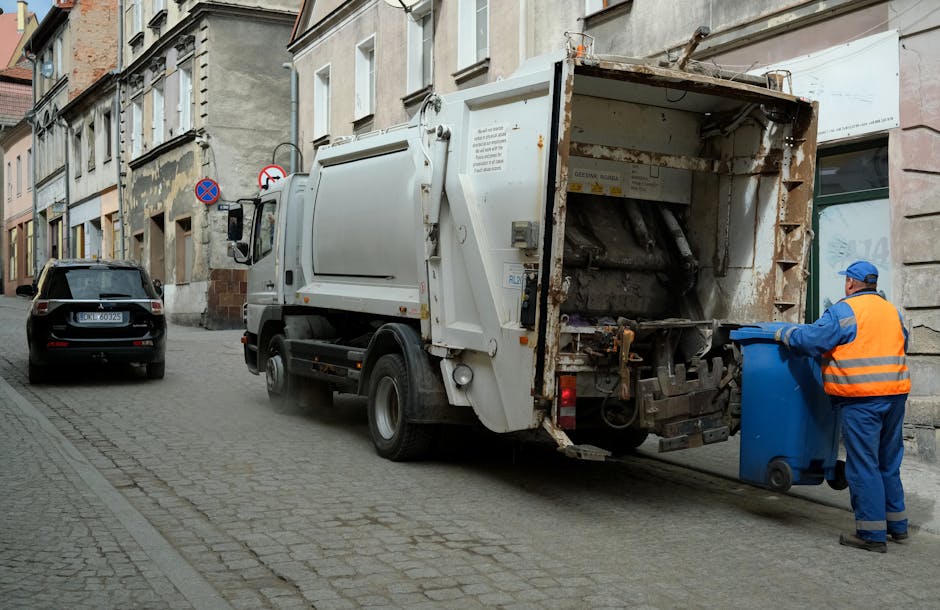
Thamesmead Town Centre clearance: best local rubbish services for fast, tidy, local waste removal
If you need Thamesmead Town Centre clearance: best local rubbish services, you are probably dealing with something messy, urgent, or just plain awkward. A pile of old furniture in a flat, builders' rubble after a small renovation, office clutter that has outgrown the spare room, or a garage that has become a storage black hole over the years. It happens. And truth be told, most people do not want a grand lecture about waste - they want it gone, properly, without hassle.
This guide breaks down how local rubbish services around Thamesmead Town Centre work, what to look for, what to avoid, and how to choose the right clearance option for your situation. You will also find practical comparisons, a checklist, and local service links to help you move from "this needs sorting" to "that is finally done."
One thing to keep in mind: a good clearance service does more than just load items into a van. It helps you sort what can be reused, recycled, or responsibly disposed of, while keeping access, timing, and safety in mind. That is where the difference between a decent service and a genuinely useful one starts to show.
Why Thamesmead Town Centre clearance matters
Town centre clearances are different from clearing a quiet driveway at the edge of suburbia. Around Thamesmead Town Centre, access can be tighter, footfall can be busier, and timing matters more than people expect. A cluttered shop unit, a flat with narrow access, or a commercial space mid-refit can quickly create a knock-on effect if waste is left sitting around.
That matters for a few very ordinary reasons. First, waste takes up usable space. Second, it can create trip hazards or obstruct entrances. Third, if it is left too long, the job starts to look bigger and more stressful than it really is. And yes, the smell from old carpets, damp cardboard, or garden cuttings left in warm weather is never a lovely bonus.
Choosing the best local rubbish services is really about choosing the service that fits the setting. A good team will understand mixed waste, access challenges, customer timings, and the need to work neatly. That might mean a same-day pickup, a weekend slot, or simply a crew that arrives prepared and keeps things moving.
If you are comparing service types, it helps to look at the broader waste-removal offer too. For example, general waste removal in Thamesmead is useful for mixed household or commercial items, while more specific clearances, like office clearance or house clearance, make sense when the job is larger or more defined.
How Thamesmead Town Centre clearance: best local rubbish services works
Most local rubbish services follow a straightforward process, although the quality of each step varies. In practice, the job usually begins with a quick description, photos, or a site visit. That helps the provider estimate the load, identify access issues, and judge whether anything needs special handling. A realistic quote should take into account the amount of waste, the type of items, and how easy it is to remove them.
On the day, a team arrives with the right vehicle and equipment. If the clearance is in a flat, loft, garage, or shop unit, the crew may need to carry items down stairs or through shared areas. That is where experience shows. A careful team protects walls, avoids blocking neighbours, and works in a sensible sequence rather than just rushing and hoping for the best.
After loading, the waste is taken away for sorting. Depending on the material, items may be reused, recycled, or sent for disposal. Good providers are usually clear that not everything goes to the same place. Furniture, metal, cardboard, wood, and general rubbish are often separated where practical. For residents who want to prioritise reuse, services such as furniture clearance and furniture disposal can be especially useful.
A simple rule helps here: the more clearly you describe the waste, the smoother the service tends to be. "A few bags" is vague. "Six black sacks, one wardrobe, two office chairs, and a broken shelf" is much better. Not glamorous, but useful. Very useful.
What a good service usually includes
- Clear arrival window or agreed time slot
- Transparent pricing or a clear quote basis
- Manual loading from inside or outside the property
- Sorting of recyclable and reusable items where possible
- Respect for shared access, neighbours, and the property itself
- Responsible disposal, not just a quick van load and vanish
Key benefits and practical advantages
The obvious benefit is space. Once the waste is gone, the room, office, or outside area becomes usable again. But the less obvious benefits are often the ones that matter most.
Speed: local rubbish services can often deal with clearances much faster than arranging multiple trips to a disposal site yourself. That is especially helpful if you are working to a move-out date, end-of-tenancy deadline, or shop refit schedule.
Less physical strain: lifting bulky furniture, heavy sacks, or awkward items can be hard on your back and risky if you do not have the right tools or help. Let's face it, an old wardrobe always feels heavier on the stairs than it looked in the room.
Cleaner finish: A professional team should leave the area swept or at least cleared neatly after collection. That small detail makes a big difference, especially in shared buildings or customer-facing premises.
Better waste handling: If you care about sustainability, a proper service can help separate recyclable materials. That is one reason many people check a company's recycling and sustainability approach before booking.
Flexible support: From a single bulky item to a full property cleanout, the right provider can scale the service without making you re-explain the whole job from scratch.
Expert summary: The best rubbish service is not always the cheapest or the biggest. It is the one that understands your access, your timing, and the type of waste you actually have - and then handles it with minimum fuss.
Who this is for and when it makes sense
Thamesmead Town Centre clearance services suit a wide range of situations. If your needs are simple, you might just want a few unwanted items removed quickly. If the job is larger, you may need a more structured clearance with sorting, labour, and careful planning.
This kind of service makes sense for:
- Homeowners clearing out clutter before a move or refurbishment
- Tenants leaving a flat and needing leftover items removed
- Landlords or letting agents dealing with post-tenancy rubbish
- Shops, cafes, and office spaces clearing old stock or fixtures
- Tradespeople who need builders' rubble or renovation waste collected
- People sorting lofts, garages, or sheds that have become overfull
For residential jobs, a home clearance service is often the right fit if the property has mixed items across several rooms. For larger or more structured jobs, flat clearance can be ideal when stairs, shared hallways, or compact access are part of the picture.
And for business users, timing is usually the biggest issue. A small office does not need a dramatic overhaul; it needs the old desks, chairs, paper waste, and storage clutter removed without wrecking the working day. In that case, a dedicated business waste removal or office clearance service is the sensible route.
There is also a seasonal angle. Spring clear-outs, pre-Christmas reorganising, and early-year office resets often generate a surprising amount of waste. Small job, big pile. Somehow it always grows.
Step-by-step guidance
If you want the process to go smoothly, a little preparation goes a long way. You do not need to deep-clean everything first, but you should know what is going and where it is located.
- List the items or waste types. Be specific. Bulky furniture, mixed rubbish, garden waste, builders' debris, electronics, and bags of household waste all behave differently.
- Take a few clear photos. This helps a provider give a more accurate quote and spot access issues.
- Check access details. Staircases, lifts, parking, and loading restrictions can affect timing and price.
- Separate anything you want to keep. Sounds obvious, but in the middle of a busy clearance day, that one box you meant to rescue can be easy to miss.
- Ask what happens to recyclable items. This is especially helpful for mixed loads and old furniture.
- Confirm the quote basis. Make sure you understand whether the estimate is based on load size, labour, waste type, or access.
- Be present if possible. You do not need to hover. Just being reachable helps if decisions are needed on the spot.
- Do a final walk-through. Check cupboards, shelves, loft edges, and behind larger items before the crew leaves.
For furniture-heavy jobs, it can help to think in categories: keep, donate, reuse, dispose. If you are clearing a garage, loft, or garden area, that same logic still works. It simply becomes more dusty, more awkward, and a bit less photogenic. That is normal.
If you are dealing with a larger domestic cleanup, related services like house clearance, garage clearance, loft clearance, and garden clearance can each solve a different version of the same problem: too much stuff, not enough time, and nowhere good to put it.
Expert tips for better results
A good clearance is not just about removing waste. It is about making the job easier before the van even arrives.
Tip 1: Group items by type. Put furniture together, keep bags in one place, and avoid scattering waste around different rooms unless you really must. It saves time and reduces mistakes.
Tip 2: Tell the truth about access. If the lift is unreliable, the parking is tight, or the waste is on the third floor, say so early. No one enjoys unpleasant surprises on arrival.
Tip 3: Keep fragile items separate. Glass, mirrors, and sharp materials should be pointed out clearly. A careful team will want that information anyway.
Tip 4: Ask about mixed waste. Some loads include a little of everything - wood, packaging, old chairs, a broken cabinet, maybe a suitcase no one recognises. Mixed waste is normal, but it should still be handled properly.
Tip 5: Think ahead about replacement furniture or layout. If you are clearing a room for a new desk, bed, or retail display, schedule the removal before the delivery. It saves the awkward shuffle of moving things twice.
Tip 6: Do not wait for the pile to become a project. Smaller clearances are almost always easier than one giant Saturday of doom. A quick booking often beats weeks of "we'll deal with it soon."
In our experience, people often feel relieved within minutes of the clearance starting. Not because the job is finished, but because it has finally become manageable.
Common mistakes to avoid
Most clearance problems come from vague planning rather than the rubbish itself. A few common mistakes are worth avoiding.
- Booking on price alone. The cheapest quote is not always the best value if access, labour, or disposal handling are unclear.
- Underestimating volume. A room that looks "mostly empty" can still contain a surprising amount of material once sorted.
- Not mentioning bulky items. Wardrobes, sofa beds, filing cabinets, and large appliances can change the logistics quite a bit.
- Ignoring parking or loading restrictions. This can lead to delays, extra carrying, or rescheduling.
- Mixing keep and dispose items together. It creates stress and increases the chance of mistakes.
- Assuming every provider handles every waste type. Some jobs need specialist handling, especially if the items are heavy, awkward, or require separate disposal arrangements.
A smaller but important point: do not leave valuable or personal paperwork in clear-out piles. It sounds obvious, but people do it all the time. Bank letters, passports, lease papers, and old USB drives have a habit of hiding in plain sight.
Tools, resources and recommendations
You do not need complicated equipment for a local clearance, but a few simple tools help. A torch is useful for lofts and under-unit spaces. Strong sacks or boxes help you organise anything you want to keep. Tape and labels are handy for separating items by room or destination. And if you are managing the job yourself before a collection, a basic marker pen can save a lot of confusion.
If you are comparing services, a few pages on the site can help you understand the options more clearly:
- pricing and quotes for understanding how estimates are usually prepared
- about us if you want a sense of the company's approach and background
- contact us to ask about access, timing, or a specific clearance challenge
- insurance and safety for reassurance about responsible working practices
- health and safety policy if your clearance is in a busy building or workplace
If the task is more specialised, it helps to match the service to the waste. For example, builders' waste clearance is better for renovation debris and site offcuts, while garage clearance suits mixed household clutter, tools, and forgotten storage. For a business moving out or reorganising, office clearance will usually be more suitable than a general collection.
Law, compliance, standards and best practice
Waste removal in the UK comes with responsibilities, even for apparently simple jobs. The exact obligations depend on the waste type, the property, and who is handling the collection. You do not need to become an expert in waste law to book a service, but you should expect a provider to act responsibly and explain anything unusual clearly.
In practical terms, good practice usually means:
- disposing of waste through appropriate and lawful routes
- handling items safely, especially heavy or sharp materials
- separating recyclable materials where practical
- being clear about excluded items or special handling needs
- respecting access routes, shared spaces, and neighbouring properties
If your job involves commercial premises, larger volumes, or construction debris, compliance becomes even more relevant. A business should be able to explain how waste is handled, and a trustworthy clearance provider should not be vague about it. That is one reason support pages like terms and conditions and privacy policy matter too - they show there is a proper framework behind the service, not just a van and a mobile number.
For customers, the simplest standard is this: ask how items are taken away, how they are processed, and what happens if the job changes on arrival. A clear answer is a very good sign. A vague one, not so much.
Options and comparison table
Different jobs call for different approaches. Here is a practical comparison to help you narrow things down.
| Option | Best for | Pros | Watch outs |
|---|---|---|---|
| General waste removal | Mixed household or light commercial rubbish | Flexible, quick, broad use | May not be ideal for bulky or specialist loads |
| House clearance | Whole-home or multi-room jobs | Good for large volumes and varied contents | Needs accurate access and item details |
| Flat clearance | Properties with stairs, lifts, or shared access | Well-suited to compact urban settings | Parking and stair access can affect timing |
| Office clearance | Desks, chairs, files, and business items | Good for scheduled, professional removals | May require extra planning around business hours |
| Builders' waste clearance | Renovation debris and site waste | Useful after small refurbishments or repairs | Heavy loads may need specific handling |
| Furniture clearance/disposal | Sofas, beds, wardrobes, tables | Great for bulky, awkward items | Needs accurate item list and access info |
If you are unsure which route fits best, start with the type of waste rather than the room. That one shift in thinking usually makes the decision much easier. A loft with old furniture is not the same as a loft full of broken boxes and paper, for example. Sounds obvious, but it really helps.
Case study: a realistic local clearance
Imagine a small retail unit near Thamesmead Town Centre closing for a refit. The space has a counter, several display shelves, a couple of office chairs, packaging waste, and a back room full of mixed storage. The owner does not want days of disruption, and the space must be empty before new fixtures arrive on Thursday morning.
A practical clearance plan would look like this: first, the owner sends photos and a rough list. The service confirms the likely load size and checks access, including where a van can safely stop. On the day, the crew clears the obvious bulky items first, then the loose waste, then does a final sweep of the back room. Anything recyclable is separated where possible, and the shop is left ready for the next step in the refit.
The useful part is not just that the waste disappears. It is that the owner does not have to coordinate multiple people, borrow a van, or guess how long the job will take. The result is calmer, cleaner, and less disruptive. To be fair, that is what most people really want from a good local clearance service - not drama, just movement.
Practical checklist
Use this checklist before booking or on the morning of the clearance.
- Have I listed the items or waste types clearly?
- Do I know what is staying and what is going?
- Have I taken photos for reference?
- Is access straightforward, or should I mention stairs, lifts, or parking limits?
- Are there any fragile, sharp, or heavy items to flag?
- Have I asked how recyclable or reusable items are handled?
- Do I understand the quote and what could change it?
- Have I checked the service is suitable for this type of waste?
- Have I removed personal documents and valuables?
- Am I available for any quick decisions on the day?
If you can tick most of those off, you are already ahead of the game. Really.
Conclusion
Choosing Thamesmead Town Centre clearance: best local rubbish services is less about finding a flashy promise and more about finding a practical fit. You want a team that knows how to handle access, time pressure, mixed waste, bulky items, and the ordinary chaos that comes with clear-outs. The best providers make the process feel organised, calm, and surprisingly straightforward.
Whether you are clearing a flat, office, garden, loft, garage, or a whole property, the same basic principles apply: describe the job clearly, check the service match, and pick a provider that treats disposal responsibly. That small bit of planning saves time, money, and stress later on.
Get a free quote today and see how much you can save.
If you are ready to move things on, start with a quick conversation and a couple of photos. A sensible local clearance is often easier than you think - and once it is done, that cleared space feels like a fresh breath, especially on a busy Thamesmead day.
Frequently Asked Questions
What is the best local rubbish service for Thamesmead Town Centre clearance?
The best service is usually the one that matches your exact waste type, access needs, and timing. For mixed rubbish, general waste removal is often ideal. For bigger domestic jobs, house or home clearance can be better.
How do I know whether I need furniture clearance or full waste removal?
If the main issue is bulky items like sofas, wardrobes, or tables, furniture clearance is the obvious fit. If you also have bags, packaging, broken bits, or mixed clutter, general waste removal may be more practical.
Can a clearance service collect items from upstairs flats or buildings with lifts?
Yes, many can, but you should mention stairs, lifts, and any access restrictions before booking. That detail helps the team plan the job properly and avoid delays.
Is office clearance different from business waste removal?
They overlap, but not always. Office clearance is usually better for desks, chairs, files, and office contents. Business waste removal can be broader and may suit shops, storage rooms, or mixed commercial rubbish.
What should I do before the clearance team arrives?
Separate what you want to keep, take a few photos if needed, and make access as clear as possible. If you have personal paperwork or valuables, remove those first. Simple, but important.
Can builders' waste be removed from a small renovation in Thamesmead?
Yes. Builders' waste clearance is often used for small refurbishments, repairs, or DIY projects. Just make sure you describe the material clearly, especially if it is heavy or mixed with other waste.
How long does a typical local rubbish clearance take?
That depends on the amount of waste, access, and whether items are bulky or scattered through multiple rooms. A small clearance can be fairly quick, while larger jobs naturally take longer.
Do clearance services recycle items where possible?
Many do, but the approach varies. If recycling matters to you, ask about the company's recycling and sustainability practices before you book.
What if I have waste in the garage, loft, and garden all at once?
That is common, actually. A home clearance or broader waste-removal service may be more efficient than booking three separate jobs, especially if the same crew can handle the mix in one visit.
How do I compare quotes fairly?
Compare what is included, not just the headline price. Check labour, access assumptions, waste type, and whether the quote covers loading and disposal. A clear quote is usually the most useful one.
Are there any documents I should check before booking?
It can help to review the company's pricing and quote information, insurance and safety details, and terms and conditions. Those pages give you a better sense of how the service operates and what to expect.
What is the most common mistake people make with clearance jobs?
The most common mistake is underestimating how much waste there really is. Another one is forgetting about access. A clear list and a few photos solve a surprising amount of trouble.